Eurasia in India's Strategic Calculus
Press Information Bureau, India
A view of the Rashtrapati Bhawan, New Delhi, India
A view of the Rashtrapati Bhawan, New Delhi, India
Globally, Eurasia refers to the world's largest continuous landmass, combining Europe and Asia as a single supercontinent. The term originated in the 19th century as a geographical construct. Later, it was popularised by political geographers to describe the combined Europe-Asia landmass without artificial divisions like the Ural Mountains. In geopolitical discourse, it gained prominence through Halford Mackinder's Heartland theory in the early 20th century. Mackinder’s Heartland theory suggested that control of the Eurasian core (especially Central Asia) is pivotal to global dominance. In the post-Soviet era, this geopolitical reading of Eurasia has evolved. Russian thinkers like Alexander Dugin advocated it as Eurasianism and have framed it as a unique civilizational space blending Slavic, Turkic, and steppe elements.
Because of the geostrategic location and abundance of natural resources, Eurasia has long been a playground for major power play in the twenty-first century. For each major power engaged in Eurasia, distinct conceptions of the construct reflect their geopolitical interests. Russia’s conception of ‘Sphere of Influence’ and resisting Western dominance in its backyard is one of its main geopolitical objectives in Eurasia. For China, the region is important for both economic and security interests. For the US and the West, Eurasia is seen as a theatre for containing Russia and China, the heartland’s dominant powers. While all such distinct national conceptions of Eurasia treat Central Asia as the locus region, the term itself has become a ‘definitional morass’, evading strict definitions or geographical strictures.
For India, Eurasia is not merely geographical but a civilizational and strategic continuum rooted in ancient linkages spanning across millennia. Much before the Silk Road, the Indian subcontinent, or South Asia today, frequently exchanged ideas, commodities, peoples and philosophies with this region. In the twenty-first century, it represents India's extended neighbourhood beyond the maritime domain, encompassing energy-rich Central Asia, the Caspian Sea linked-Caucasus region, and Russia. Afghanistan also occupies a pivotal place in India’s conception of Eurasia as it serves as an interface between Central and South Asia, and is sometimes treated simultaneously as part of India’s immediate and extended neighbourhoods.
Unlike the Western view of Eurasia as a heartland prize or Russian civilizational narrative, India's conception of Eurasia emphasises mutual respect for sovereignty, multipolarity, and balanced partnerships. The region itself is vital for India's energy security - oil, gas, uranium and critical minerals. The forces of extremism and radicalisation in the region, especially in the Afghanistan-Pakistan border region, makes the area of strategic interest to India. As a result, India has promoted counter-terrorism cooperation with Afghanistan and the Central Asian republic. Another major driving force in India’s Eurasia calculus include the imperative of trade diversification with this underexplored region, and to prevent its encirclement by any single power.
New Delhi's potential focus on the Eurasian region is also driven by its historical and cultural ties to Eurasian countries, especially Russia and the Central Asian Republics. For India’s Eurasia strategy, Central Asia serves as the core, Afghanistan as a gateway, the South Caucasus as a strategic partner for shared interests in regional connectivity, and Russia as a reliable partner. India rejects zero-sum games and aspires to forge strategic partnerships and alliances with countries with common interests in regional stability, economic development, and multilateral cooperation. India's view avoids ideological framing, focusing on developmental partnerships and is rooted in the principle of strategic autonomy.
New Delhi continues to describe the region as part of its ‘extended neighbourhood’ and a ‘natural partner.’ Yet, this narrative has not translated into tangible strategic or economic gains. The Eurasian region presents immense economic opportunities for India. By leveraging its historical connections with the region, India aims to foster stronger people-to-people relations, promote tourism, and enhance cultural diplomacy. Rich in natural resources and strategically located along key trade routes, the region offers the potential for enhanced trade, investment, and energy cooperation.
India can tap into these markets, diversify its economic engagements, and strengthen its energy security. India's engagement with Eurasia is also crucial for maintaining a balance of power in the region as it seeks to promote a multipolar Eurasian order as a precursor to a just multipolar world. Unlike China and Russia's increasing assertiveness in Eurasia through initiatives such as the Belt and Road Initiative (BRI) and the Shanghai Cooperation Organisation (SCO), India however, lacks strong institutional grounding or a regional grouping of its own through which it can actively participate in safeguarding its interests and counterbalance regional imbalances.
In the contemporary era, India's foreign policy has leaned towards the maritime domain (Indo-Pacific, Act East, Quad). On closer enquiry, this is partly due to the colonial legacy of the partition of South Asia in 1947 and the subsequent Pakistani refusal to allow India passage to Afghanistan and Central Asia. These structural constraints have led to relative Indian neglect of continental Eurasia in the last seven decades, despite enduring civilizational ties and several material linkages predating the partition of the subcontinent. India’s ‘Connect Central Asia’ policy in 2012 marked a shift, but implementation lagged amid maritime priorities and continuing instability in Afghanistan.
Prime Minister Narendra Modi’s visit to all the five Central Asian countries in 2015 signalled a high point in India’s regional outreach. However, high-level exchanges have since remained limited; the last state visit to India by a Central Asian leader was of Uzbek President Shavkat Mirziyoyev in 2018. Even though India-Central Asia relations matured in the last decade, beginning with the institutionalisation of dialogue at the foreign ministers’ level in 2019, the first India–Central Asia Summit convened virtually in 2022, and the SCO Summit under India’s presidency held in a virtual format in 2023, the absence of sustained, in-person high-level engagements has contributed to a perception that India’s engagement with Central Asia has lost momentum.
Broader geopolitical developments, including the fallout of the Russian-Ukrainian war, tensions in West Asia centring Iran, and shifting Eurasian connectivity dynamics, are reshaping the strategic calculations of the regional countries in Eurasia. Regional states are increasingly pursuing multi-vector foreign policies while expanding their engagement with a wide range of external partners. These developments, while presenting a complex geopolitical situation, are opening a sliver of opportunity for India. The country is well-placed as a neutral balancer with strong and resilient ties with Russia and Central Asian countries.
However, limited connectivity and the gap between policy formulation and implementation continue to hinder India’s Eurasia strategy. To bridge this gap, India must adopt a consolidated, multi-pronged continental strategy prioritising alternative connectivity; including exploring air and digital connectivity. Leveraging soft power, including expanding educational cooperation, promoting cultural connections, bolstering people-to-people contacts and capacity-building programmes must be given high priority. In the absence of direct connectivity, incentivised investments (especially by private sector and through global arms of Indian public sector undertakings), localisation of bilateral economic activities, and digital cooperation have huge potential to grow.
Integrating Eurasia into India's broader grand strategy by balancing its maritime and continental dimensions is essential for sustained, meaningful engagement in the region. Despite geopolitical, logistical, and infrastructural barriers, New Delhi can steadily expand its influence through consensual partnerships that prioritize mutual respect for sovereignty and shared prosperity. Reclaiming India’s continental thinking in terms of foreign and defence policy does not necessarily mean undermining its maritime priorities. It only needs a thorough, interest-based reassessment of India’s strategic alignments through a bold engagement with the region and an ability to think beyond the obvious.
Against this evolving backdrop, the India Eurasia Research Forum (IERF) stands uniquely positioned to bridge persistent gaps and accelerate sustained, high-impact engagement between India and Eurasian stakeholders. As a dedicated platform focused exclusively on India-Eurasia ties, unlike broader think tanks with diversified mandates, IERF delivers targeted, high-quality research and facilitates multi-stakeholder dialogues. It convenes Track 1.5 and Track 2 initiatives that bring together government officials, domain experts, civil society, academia, and private-sector actors to address priority domains. This will include Physical and digital connectivity (including INSTC optimization, Chabahar synergies, air/digital corridors, and emerging tech linkages), security and counter-terrorism cooperation, energy security and critical minerals, cultural and people-to-people ties (education, tourism, capacity-building, and heritage diplomacy) and multipolarity and balanced regional dynamics.
Through regular seminars, webinars, policy roundtables, and Track 1.5 exchanges, IERF will generate actionable outputs such as commentaries, policy briefs, articles, joint research publications, and facilitate bilateral/multilateral exchanges. These efforts amplify India's strategic voice in Eurasian discourse while ensuring reciprocal insights flow back to New Delhi. This will help foster mutual understanding and consensus-driven partnerships.
In a rapidly transforming Eurasia, marked by multi-vector foreign policies and connectivity realignments, IERF will serve as a vital enabler. By driving evidence-based continental re-engagement, it will help India build enduring strategic depth that complements its continental priorities, safeguarding national interests through sovereignty-respecting cooperation and shared prosperity.
About the Author
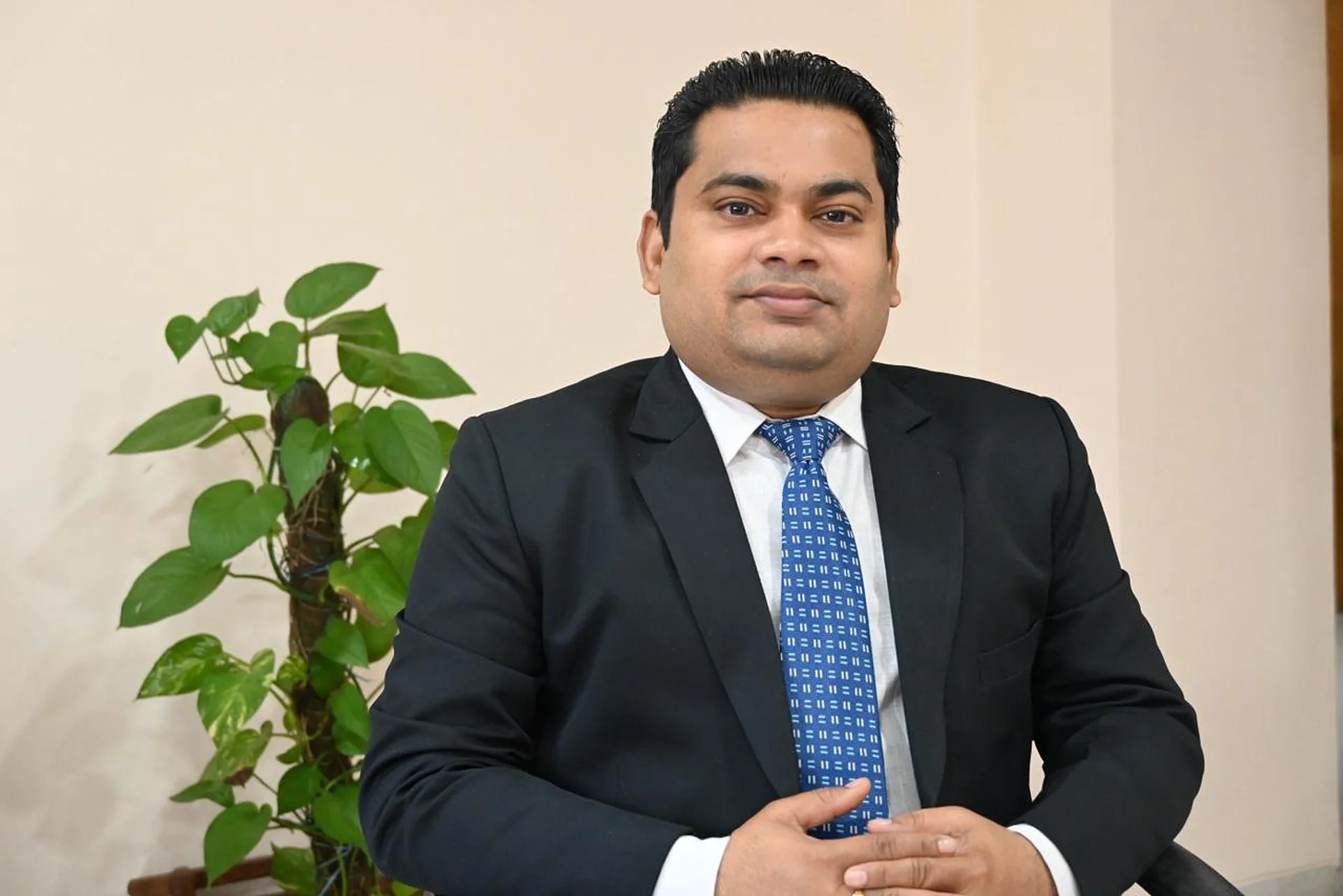
Dr. Pravesh Kumar Gupta
Dr. Pravesh Kumar Gupta is an Associate Fellow at the Vivekananda International Foundation (VIF). He is also the Research Advisor to the India Eurasia Research Forum (IERF). Dr. Gupta is an expert on Eurasian geopolitics and his research focuses on the society and politics of Central Asia, energy security and sustainability, and trans-regional connectivity linkages between Central and South Asia.