Intercultural Dialogue in Practice: Lessons from Russian-African Delegation Work

Personal Archive
From Business Forum, South Africa
To start with, Mikhail Bakhtin, the renowned Russian philosopher and literary scholar, wrote in his work "The Aesthetics of Verbal Creation" (1986): "There exists a very persistent, but one-sided and therefore incorrect, understanding that to better understand a foreign culture, one must, as it were, migrate into it and, forgetting one's own, look at the world through the eyes of that foreign culture". The idea of a real conversation between cultures has remained central to current discussions of cultural interaction.
It resonates deeply with the French concept of 'interculturalité’(interculturality) – it is not about the assimilation or dilution of cultural differences, but about their recognition and respectful engagement. This understanding of intercultural dialogue goes well with the work of contemporary French philosopher and sinologist François Jullien. He does not compare cultures but seeks to enrich one through the other by exploring the 'distance' (écart) between Chinese and European thought. The philosopher reveals their unspoken assumptions and opens a space for good encounter — an approach that aligns with the principle of interculturality.
As an independent cultural diplomat and interpreter-attachée, I engage with the notion of interculturality in my professional environment: international forums, conferences, and world events. There is a common cliché that interpreters translate worlds, but in reality, they work with cultural codes and national traditions. By sharing my experience of work with different African delegations, I want to show how these cultural codes are put into practice and why they matter for building trust. The principles of intercultural dialogue are universal and can be applied not only to Russian–African relations but also to any encounter between distant cultures — including the growing partnership between India and the vast Eurasian space.
1. The Mooré Word That Changed Everything: Respect speaks louder than fluency.
I had been working with the Burkinabé delegation for days — formal, correct, professional environment. Then one morning, I greeted the head delegate in Mooré, his native language. Just a few words: "Good morning, I hope you rested well." His face suddenly transformed. He laughed, corrected my pronunciation with delight, and introduced me to his colleagues as "the most Burkinabé of all the Russians". The formal wall between us crumbled instantly.
So it is sometimes not crucial to master a language to master trust. The mere attempt — the willingness to step into someone's linguistic world — signals respect. And respect is the currency of mutual dialogue.
2. When Bronze Spoke Louder Than Words: Culture builds bridges that politics can not build.
At the "Grandeur in Bronze" exhibition in Novosibirsk, I wasn't just translating words; I was in two worlds at once. Russian visitors gazed at traditional Burkinabé sculptures with full of questions: "What does this figure mean? Why this posture? Who made it?" The delegates didn't just answer; however, they came alive, sharing stories of their ancestors, their myths, and their identity. And the Russians listened, truly listened!
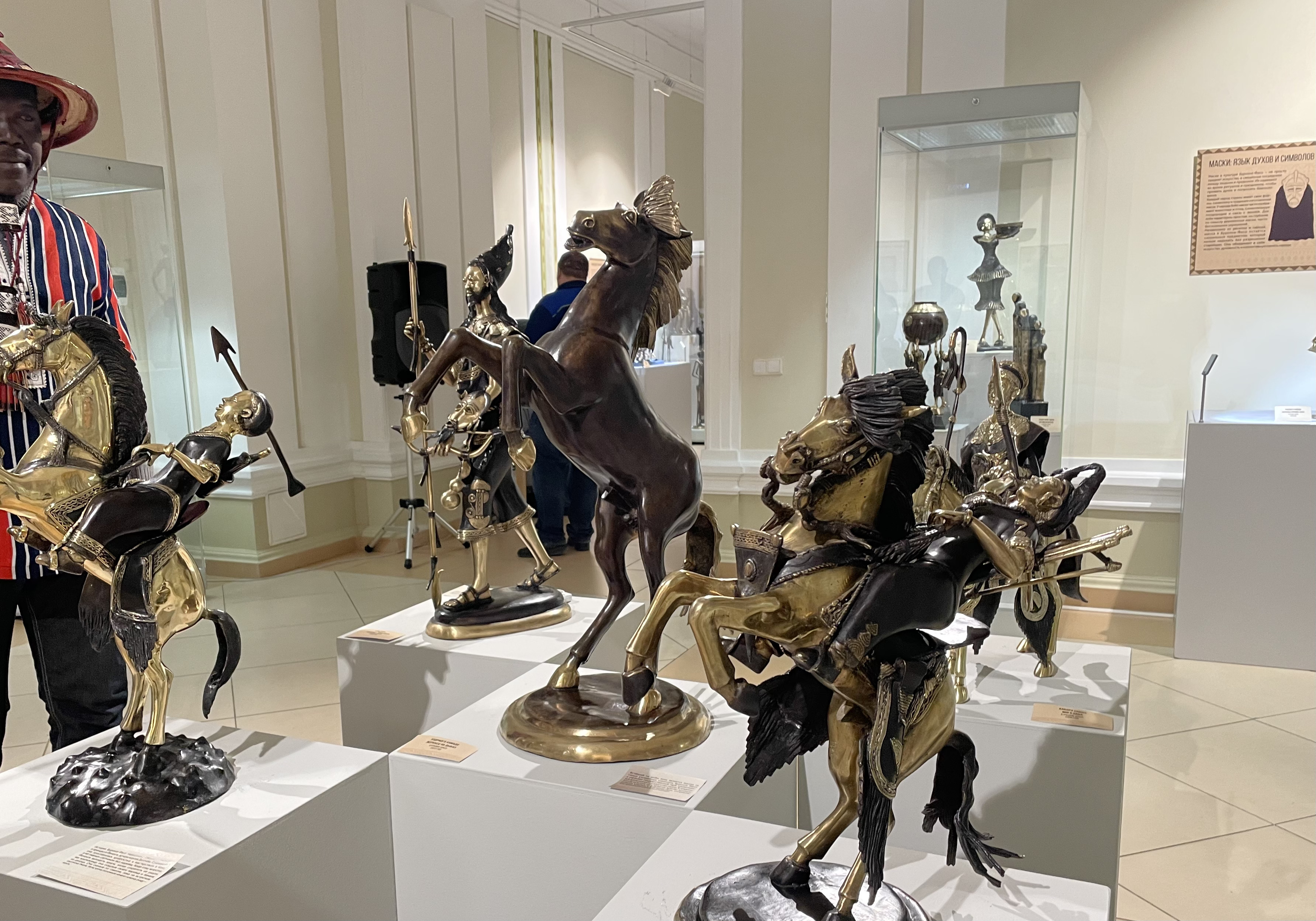
A photo from the Bronze exhibition in Novosibirsk, Russian Federation
To sum up, the art really speaks directly to the heart. When people connect through culture, they stop being "delegates" and "foreigners" — they become human beings sharing something precious. That’s why cultural diplomacy is about the exchange of human experiences, not competition.
3. The Karavai That Welcomed a Delegation: The immediate emotional connection.
I will never forget the arrival of a delegation at the airport. It was their first visit to Russia, and they were tired after a long flight. But when they stepped into the arrival hall, they were met with a traditional Russian welcome: a round loaf of bread (karavai) with a small cup of salt. According to Russian custom, this is how guests are honoured and welcomed.
Their faces changed instantly. Surprise turned into smiles, and the formal tension dissolved. Soon, everyone was taking photos, asking questions about this tradition, and sharing stories of similar customs in their own culture.
That small ritual did what hours of official negotiations could not: it truly opened hearts. The bread and salt spoke a language that needed no translation. It is the language of hospitality and respect. From that moment, the entire forum felt different. The delegation was not just a group of officials; they were guests who had been truly welcomed.
This experience taught me that interculturality lives in these gestures — in the willingness to share your culture’s soul with someone from another world. A simple loaf of bread can become a bridge, reminding us that beneath all our differences. We all value kindness and respect.
These experiences have taught me that interculturality is not a theoretical concept reserved for academic journals. It is a living practice, existing in the smallest moments of human lives. What makes dialogue mutual is not the absence of difference, but the courage to acknowledge it. Mikhail Bakhtin was right: we do not need to abandon our own culture to understand another. Instead, we need to find the space between — the place where two worlds can meet, each bringing its own light to illuminate what the other might otherwise miss. This is precisely what François Jullien calls the écart: not a gap to be bridged, but a creative distance that allows each culture to see itself more clearly through the eyes of the other.
In my work as an interpreter-attachée, I have learned that the most powerful tools of diplomacy are not technical skill or linguistic precision: they are curiosity, respect and humility. These lessons, I reckon, are universal. Whether the encounter is between Russia and Africa, India and Central Asia, or any other combination of cultures, the principles remain the same. The partnership between India and the Eurasian space, rich with history and potential, will thrive not only on economic agreements and political alliances but on the countless small moments of genuine human connection that build trust over time.
Interculturality is not about erasing differences. It is about celebrating them. It is not about finding common ground by flattening what makes us unique, but about creating a space where our differences can coexist, enrich each other, and open new possibilities for understanding. And that, perhaps, is the most important lesson of all: the future of international relations lies not in protocols and agreements, but in the simple, courageous act of meeting one another as human beings.
About the Author
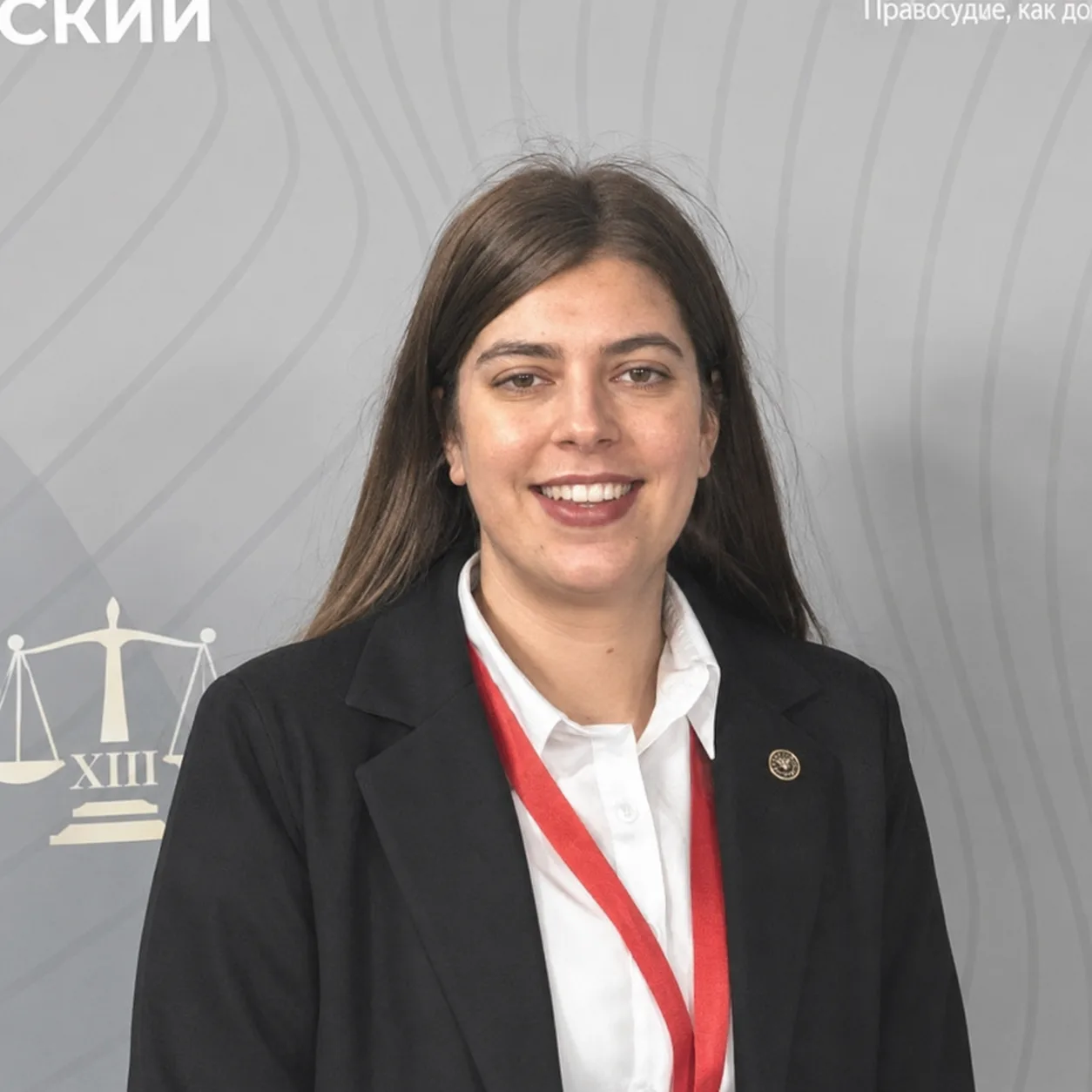
Ekaterina Pimenova
Ekaterina Pimenova has been working as an independent cultural diplomat and attachée for 3 years now. Although her experience primarily revolves around working with African delegations, Ms Pimenova believes that her experience can be applied to the development of cultural diplomacy between India and Eurasia.